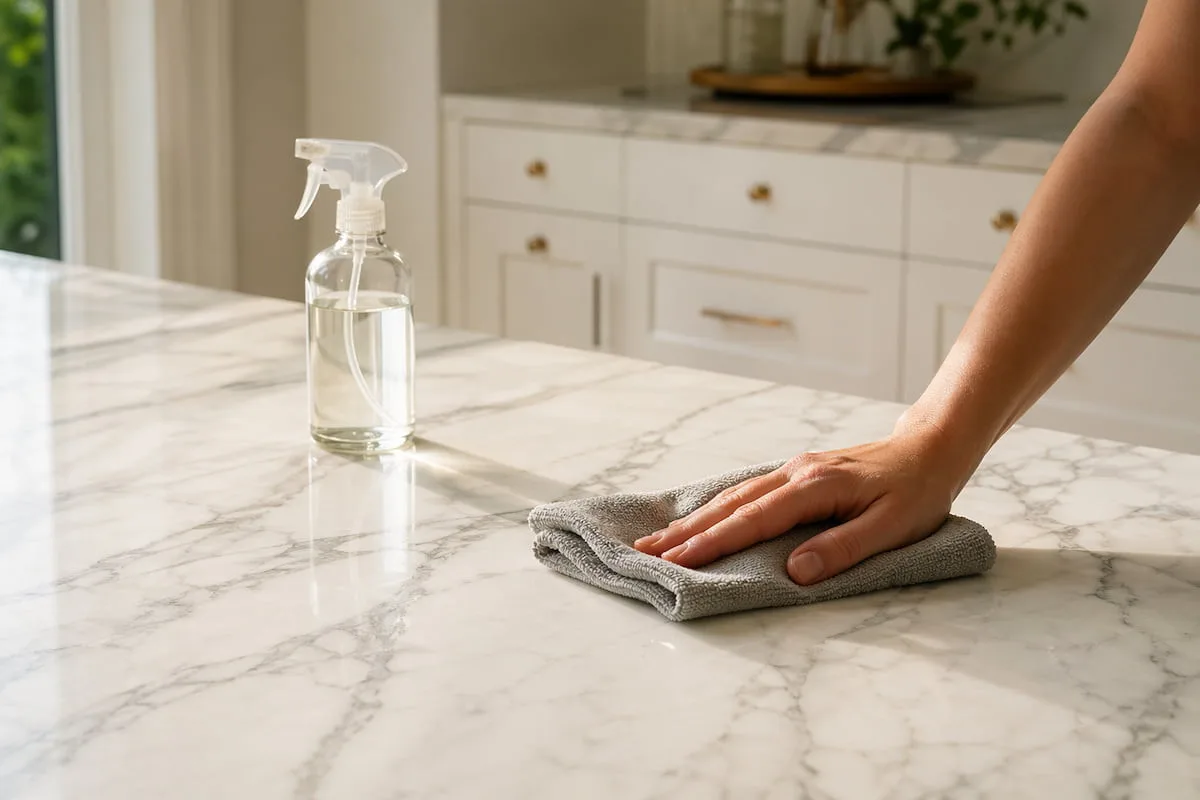
Marble Care and Maintenance Guide
Regular cleaning and suitable products help preserve natural marble and its finish. Care requirements vary according to whether the marble is used for floors, kitchen worktops or vanity tops.
How do you clean marble daily?
Remove dust with a soft cloth or clean mop. For wet cleaning, use a pH-neutral cleaner designed for natural stone and follow the product directions. Dry the surface afterwards, especially around basins and where water tends to collect.
How do you deal with spills and stains?
Blot spills promptly with a soft cloth, then clean and dry the area. Avoid vinegar, lemon juice and acidic limescale removers. A dull mark that persists after cleaning may be acid etching and may require treatment by a natural stone specialist.
How can you reduce scratches and wear?
Use cutting boards and trivets on kitchen worktops. Place mats at entrances to reduce tracked-in grit, and use felt pads under furniture legs to protect floors when furniture moves. Avoid scouring pads and abrasive powders.
Does marble need a sealer?
The need for a sealer depends on the stone, its finish and where it is used. A suitable sealer can reduce liquid absorption and the likelihood of staining. Follow the supplier’s guidance on product choice, application and reapplication.
When should you call a specialist?
If stains persist, scratches become noticeable or parts of the surface lose their sheen, a specialist can assess the marble and recommend an appropriate treatment for its finish.
Is a stain the same as a dull mark?
A stain may appear as a change in colour, while etching often looks like a dull patch, especially after contact with an acidic liquid. If the mark remains after routine cleaning, show a stone specialist a picture of it and details of the finish.