Ceramic vs. Porcelain Tiles: A Practical Selection Guide
Tiles are the surface people see and touch most in any building, and choosing them is a decision that lasts for years. This guide explains how ceramic and porcelain differ, which specifications matter, and which tile suits each space.
What Is the Difference?
Both are made from fired clay. Porcelain, however, uses a finer clay, is pressed at higher pressure and fired at higher temperatures. The result is a denser body with water absorption of 0.5% or less, far below that of ceramic.
| Criterion | Ceramic | Porcelain |
|---|---|---|
| Water absorption | Higher | 0.5% or less |
| Hardness and traffic | Light to medium traffic | Heavy traffic |
| Outdoor use | Generally unsuitable | Suitable |
| Best for | Interior walls and low-traffic floors | Floors, commercial spaces, facades, roofs |
| Cutting and installation | Easier | Requires specialist tools and adhesives |
Specifications That Matter
- Slip resistance: Usually rated R9 to R13. R9 suits dry interiors, R10 and above suits bathrooms and kitchens, and R11 and above suits outdoor areas and pool surrounds.
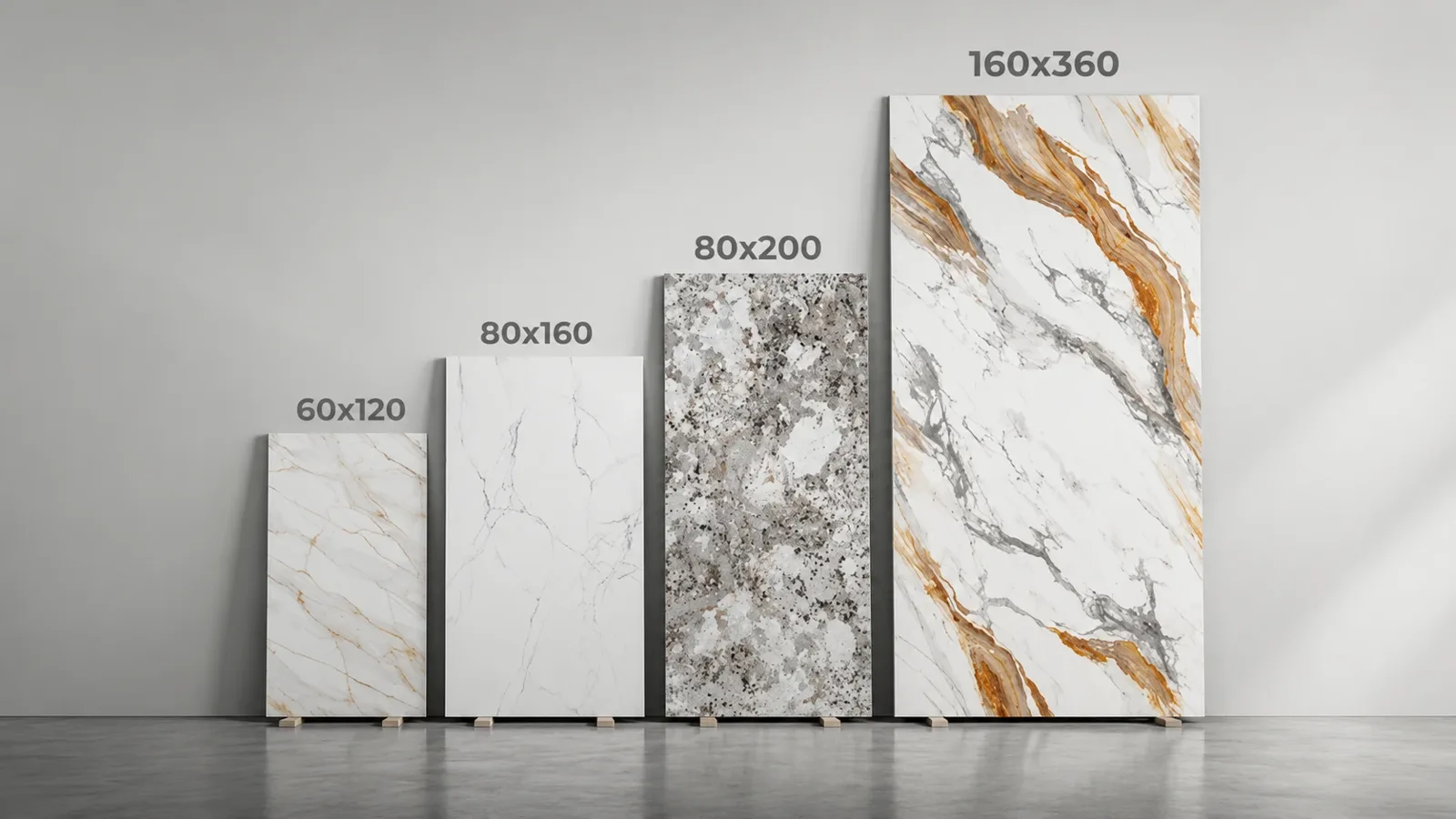
- Size: Large formats such as 60×120 cm and 120×120 cm reduce joints and make spaces feel larger, but need a level substrate and a specialist installation team.
- Thickness: Standard interior floor tiles are around 10 mm thick; 20 mm tiles are designed for outdoor courtyards, garden paths and driveways.
- Rectified edges: Precision-cut edges that allow very narrow joints and a seamless look.
- Finish: Polished reflects light and suits living areas; matt hides marks and suits high-use spaces; textured suits outdoor areas.
- Shade consistency: Buy the full quantity from a single production batch, adding 5% to 10% for cutting, waste and future repairs.
The Right Tile for Each Space
| Space | Recommended material | Recommended finish |
|---|---|---|
| Living and reception areas | Large-format porcelain | Polished or semi-polished |
| Bedrooms | Porcelain or ceramic | Matt |
| Bathrooms | Porcelain floors; ceramic or porcelain walls | Slip-resistant matt (R10+) |
| Kitchens | Porcelain | Easy-clean matt |
| Outdoor courtyards and roofs | 20 mm porcelain | Textured (R11+) |
| Commercial projects | Full-body porcelain | Matt |
Installation Determines Lifespan
Good tiles need good installation. Porcelain requires an improved cementitious adhesive (class C2), and large formats need full adhesive coverage on the back of each tile. Wet areas need waterproofing before tiling and a water-resistant or epoxy grout.
The Makarm Range
Makarm offers ceramic and porcelain tiles from Saudi, regional and international manufacturers, including Ragno, Del Conca, Pamesa, RAK Ceramics and Halcon, in sizes, thicknesses and designs covering interior and exterior floors and walls. For large projects, the Makarm team sorts tiles by shade to ensure a consistent finish on site.
Explore the range on the Ceramic & Porcelain page →
Frequently Asked Questions
Is polished porcelain suitable for bathroom floors?
It is not recommended, as its slip resistance drops when wet. A matt tile rated R10 or above is the better choice; polished tiles work well on walls.
What is full-body porcelain?
Porcelain whose colour runs through its entire thickness, so chips and scratches do not reveal a different colour. It is ideal for commercial and public spaces.
How much extra should I order?
Between 5% and 10% of the area, rising for diagonal layouts or spaces with many corners.
Can porcelain be laid over existing tiles?
Yes, if the existing tiles are firmly bonded and level, using a suitable adhesive and allowing for door and threshold heights.